
RoboFab Scales Up: PollyPolymer Introduces the T6080 for Embodied Intelligence
A 603 × 339 × 800 mm build space enables continuous, limb-scale biomimetic structures to be printed in one piece, extending RoboFab’s full-stack manufacturing capabilities.
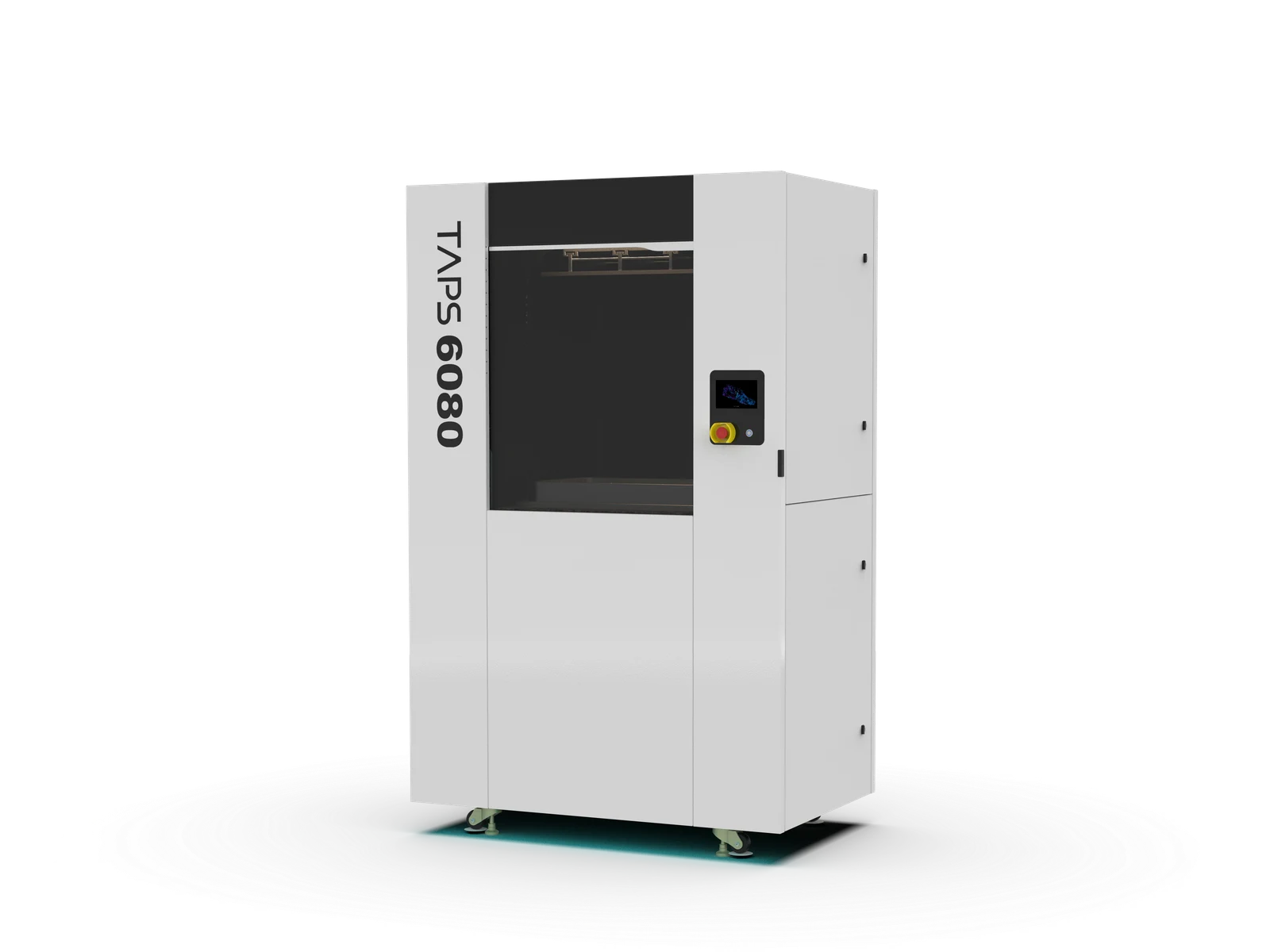
On October 15, at the third TCT Shenzhen exhibition, PollyPolymer introduced the T6080 large-format 3D printer. The machine measures 1445 × 900 × 2310 mm and offers a build space of 603 × 339 × 800 mm (L × W × H), approximately 4.9 times the build volume of the TAPS 400 (384 × 216 × 400 mm).
Designed specifically for embodied intelligence, this large-format system addresses a concrete need: printing robot structures that must remain continuous in a single build.
It is part of RoboFab, PollyPolymer’s solution for the embodied intelligence industry.
1. Why robots need a large-format printer
Joining printed sections has been common practice in 3D printing for years. When printers had limited build areas, large components were divided into smaller pieces and assembled afterward. PollyPolymer followed the same approach as the industry developed.
This method has an inherent boundary that is not simply a matter of process quality. In a structure carrying continuous loads, a seam is a natural weak point. If a biomimetic muscle is printed in three sections and bonded together, the joint is where cracking can begin under load or fatigue testing. The limitation lies in the application range of joining itself.
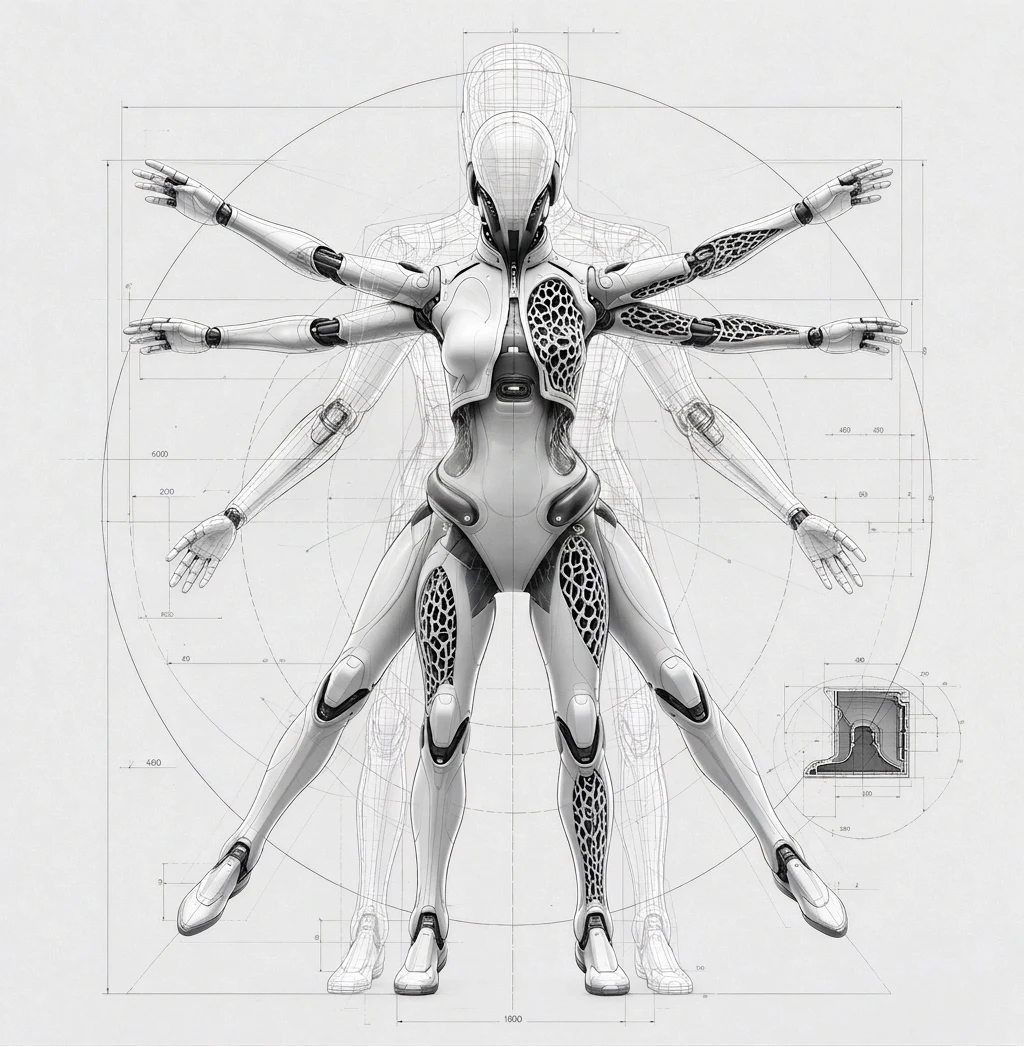
Embodied intelligence has brought this issue to the forefront. As robots begin to require full-scale biomimetic muscles, a straightforward engineering question arises: can one machine accommodate the entire continuous body segment in a single build?
The T6080 provides an answer. Its 800 mm build height makes three practical changes possible:
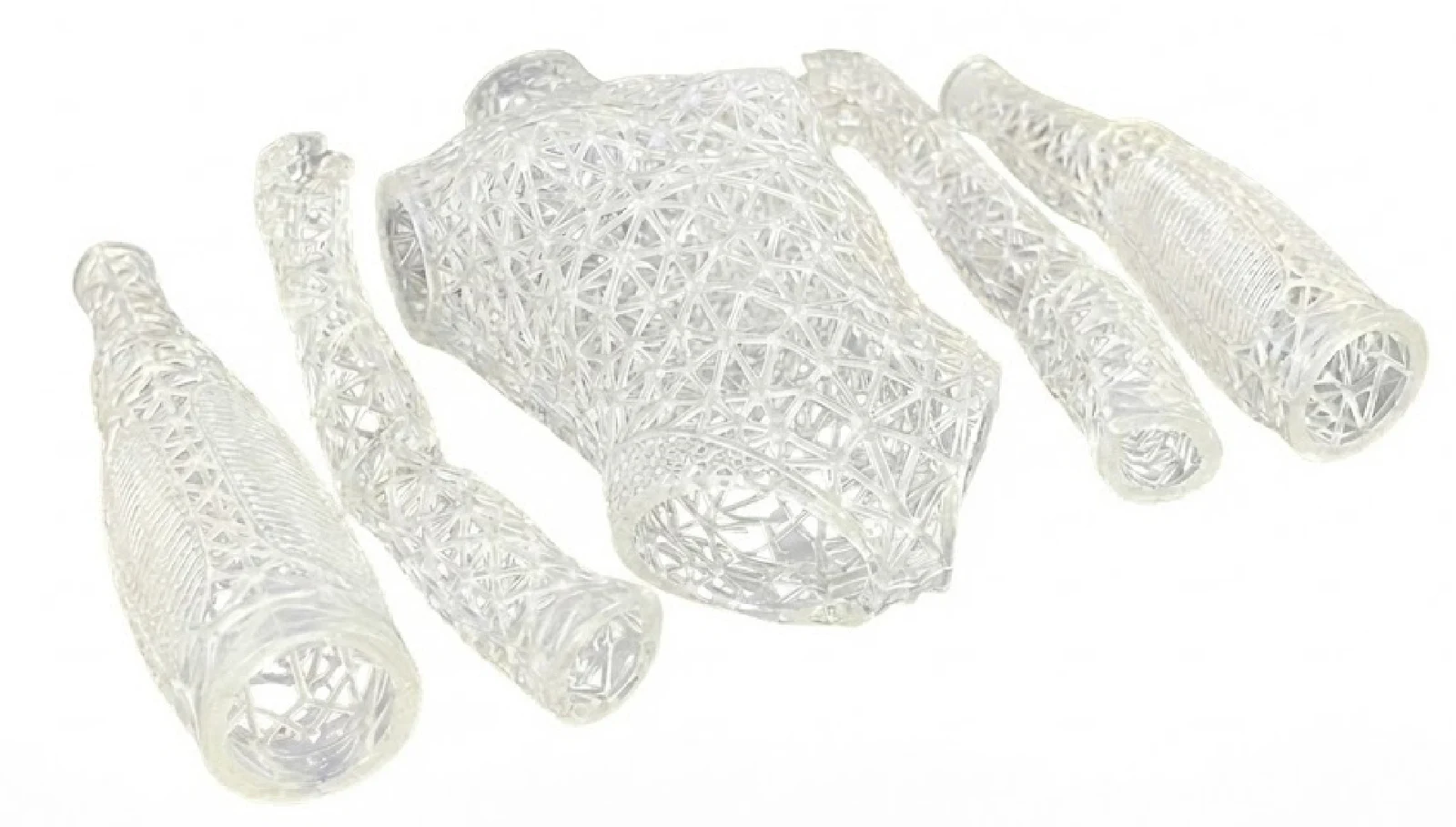
A complete limb-scale biomimetic muscle can be printed in one piece, without bonding separate sections.
A large structural component can be printed whole, without first dividing it.
Multiple products can be arranged within the same build area, rather than printed across several runs.
Size is not the objective in itself. It enables these robot manufacturing tasks to be completed in a single build, with fewer seams, assembly steps and transfers.
2. A complete set of capabilities for embodied intelligence
PollyPolymer calls this capability “biomimetic soft bodies”: continuous muscle-like structures printed in one piece using high-performance photosensitive elastomers. It addresses a mechanical problem. Biomimetic muscles are continuous bodies, and seams remain weak planes wherever mechanical continuity matters. This capability has already been applied in projects with robot companies in China and overseas.
From joints to limbs, robot body components share a common requirement: load paths must remain connected. No matter how well separate sections are joined, the seam introduces a variable into that path. The T6080 can produce the entire segment as one structure.
These capabilities are delivered together under RoboFab, a full-stack additive manufacturing solution for embodied intelligence. Digital design, high-performance materials and ultra-fast cloud factories form one connected chain. The T6080 extends the equipment capability within that chain, allowing large structures to be made without taking a detour through sectional assembly.
3. Large-format printing takes more than a larger machine
Scaling up photopolymerization equipment is not simply a matter of enlarging dimensions. Several conditions must be maintained together. As the build area expands, separation forces rise sharply; as build height increases, Z-axis accuracy must remain stable throughout the full travel. Light must remain uniform across a larger area, and the resin surface must stay level in a larger vat. If any of these conditions falls short, a machine may print large parts but struggle to print them well.
Manual monitoring alone cannot manage these demands. A larger build area means more parameters to adjust and less time to respond. The T6080 uses PollyPolymer’s new-generation PollyPilot control center, an AI-adaptive system that senses and corrects parameters in real time to maintain consistent large-format printing quality. As the equipment grows, this control becomes more critical: it determines whether large parts can be printed reliably.
PollyPolymer develops materials, equipment, software and processes as one connected system. Proprietary high-performance photosensitive elastomers and ultra-fast photopolymerization equipment are linked through carefully developed process parameters.
4. The T6080 is part of a broader roadmap
The T6080 is a new member of the TAPS equipment family, built on PollyPolymer’s proprietary HALS ultra-fast 3D-printing platform. From the TAPS 200 and TAPS 400 to the T6080, this development path has consistently addressed the same question:
How do we move beyond printing an object to making a product?
Together, these machines form the TAPS series, serving different applications.
Behind the T6080 is PollyPolymer’s complete chain, from materials, equipment and software to finished products, with each stage developed in-house and already delivered to users. That is also what RoboFab brings to the embodied intelligence industry.
Dare to be Different. Doing more with less.
If part of your project could benefit from this machine, contact the RoboFab team.