
Inside XPENG IRON: A Cut Reveals the Structure Behind Biomimetic Innovation
A look inside IRON’s lattice structures, and how 3D printing and high-performance elastomers are changing the way biomimetic robot bodies are made.
On November 5, XPENG unveiled its next-generation humanoid robot, IRON, at its 2025 Tech Day. It appeared almost like a character from Westworld: light on its feet, with natural muscle contours and a human-like rhythm to its head movements and walking. Alongside the surprise came a question: was this really a robot, or a person in disguise?
The following day, He Xiaopeng responded by cutting open the robot’s leg “muscle” while it was powered on. Beneath the flexible skin were not metal gears or hydraulic cylinders, but a dense lattice, reminiscent of a honeycomb yet more orderly. IRON continued to turn and walk steadily, drawing applause from the audience.

The cut did more than settle a debate over whether the robot was real. It opened a discussion about biomimetic structures and manufacturing methods across the industry. Compared with earlier rigidly driven humanoid machines, IRON’s structure more closely resembles a human body, with compliant joints and natural movement. Industry observers point to the role of 3D printing in its biomimetic skeletal and muscular systems.
What the cut revealed
This was more than a demonstration. It marked a turning point.
For years, biomimetic robots have faced a fundamental dilemma: looking human or functioning like a machine. Motors, gears and linkages make conventional robots depend on rigid structures for movement, while a true “muscular” system must balance strength with flexibility.

IRON’s internal design seeks to move beyond that boundary. Its fine lattice suggests a shift from assembling components to generating structures. Rather than fitting individual parts together, manufacturers combine geometry and materials so that force and form can be printed together.
The idea is familiar in academic research. A study published that year by EPFL, the Swiss Federal Institute of Technology Lausanne, proposed using topology and superposition-based programming to produce multiple stiffness levels from a single elastomer. From soft to hard, the material stays the same while its structure changes. Such programmable geometry offers an engineering route to biomimetic muscles. IRON presents an early industrial expression of this idea: using structure to emulate biology and manufacturing to recreate movement.
3D printing makes the structure possible
Conventional manufacturing struggles to produce structures like these.
Injection molding and machining are suited to more regular geometries. Complex lattices, internal density gradients and curved transitions call for digital manufacturing that builds point by point. Additive manufacturing can express a designer’s intended load distribution, topology and flexible regions with precision, acting almost as a programmable manufacturing language.
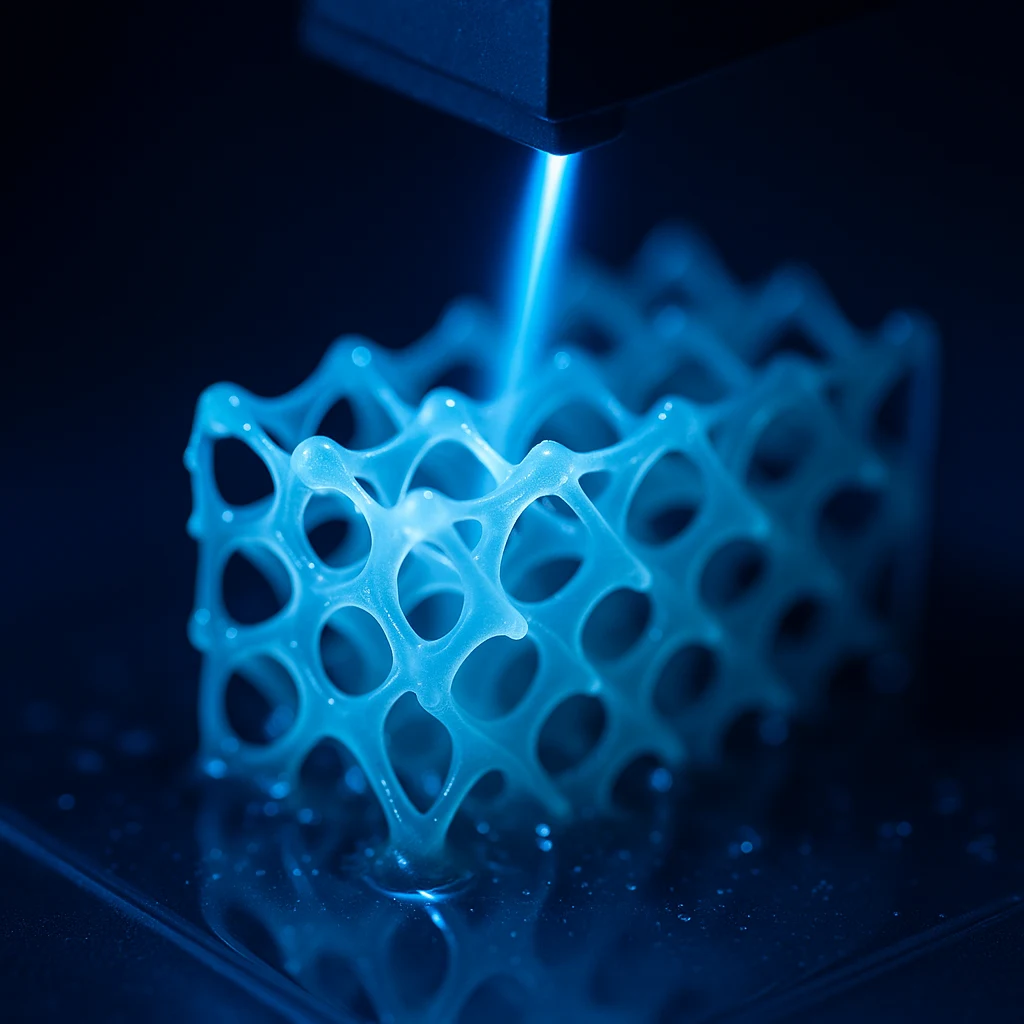
Among additive manufacturing methods, photopolymerization processes such as DLP and SLA can print high-precision flexible structures at the microscale. Features on the order of tens of microns enable fine, tissue-like lattices. The process can produce smooth surfaces and uniform internal stresses without the layer marks and stress concentrations that are particularly problematic for flexible structures: muscle-like components depend on fatigue stability as well as material strength. By contrast, nozzle diameters constrain the minimum feature size of FDM and DIW and make surface quality harder to maintain. Photopolymerization also allows precise control of curing energy and local strength gradients while preserving elasticity. Softness and toughness can therefore coexist within one component and one print, allowing it to stretch like muscle and support like bone.
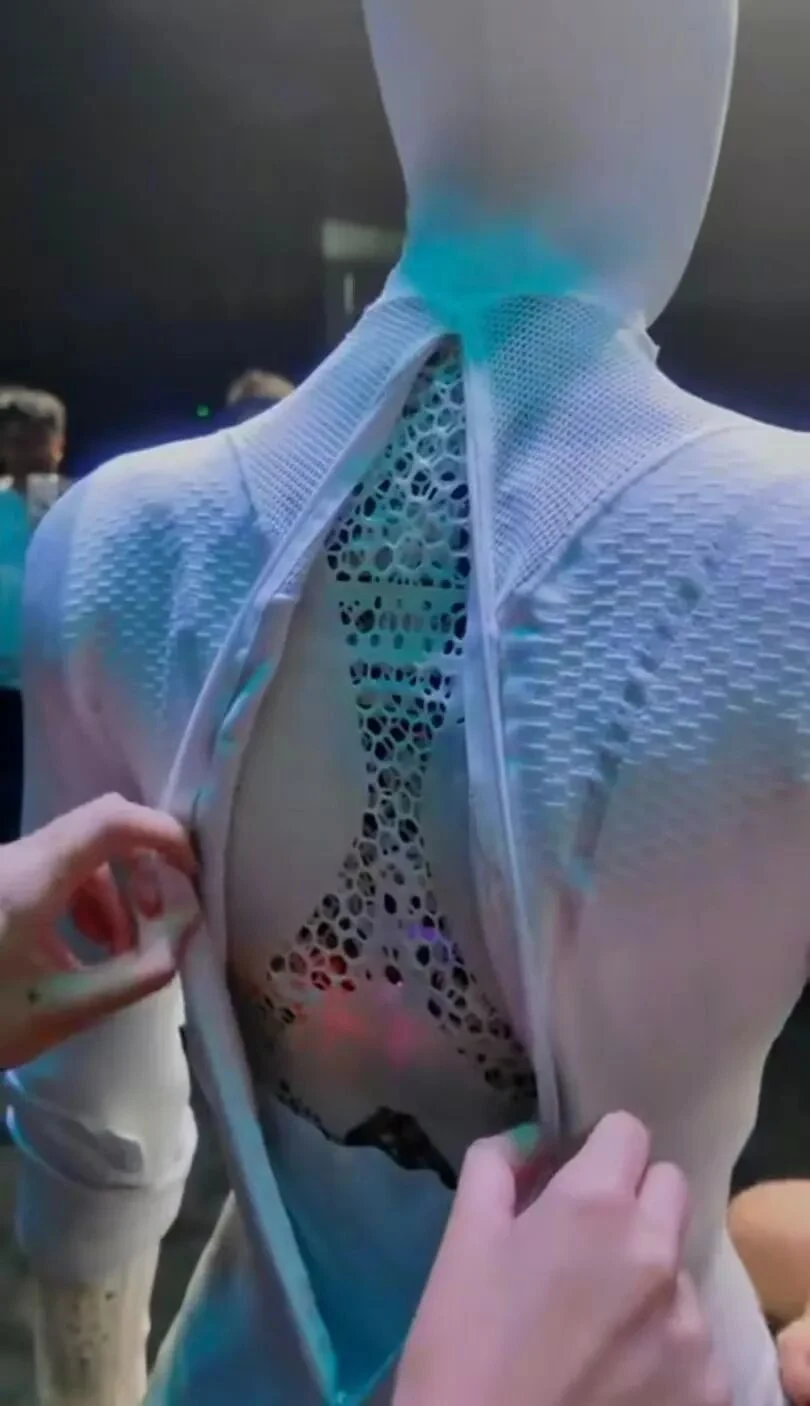
The internal muscle structure of XPENG IRON uses a high-precision, photocured elastomer. Whereas metal printing is primarily oriented toward strength, photopolymerization is well suited to micron-scale flexible networks, smooth surfaces, uniform stress distribution and longer fatigue life. This also fits the need for continuous movement and low weight in humanoid robots. It helps a robot do more than walk: it helps it walk in a human-like way. Combining this manufacturing method with biomimetic design represents a change in thinking. Greater manufacturing freedom allows mechanical systems to be built according to biological principles.
Material evolution: turning elastomers into muscles
Material development is what gives a lattice its life-like response. Modified photosensitive resins play a central role, combining the high extensibility of rubber with the structural strength of engineering plastics. Photopolymerization and geometric distribution work together to create different local mechanical responses. Regions of a single printed robot component can thus provide both support and elasticity: stability near the thigh and agility toward the lower leg. Conventional assembly of separate materials struggles to achieve this continuous mechanical transition.
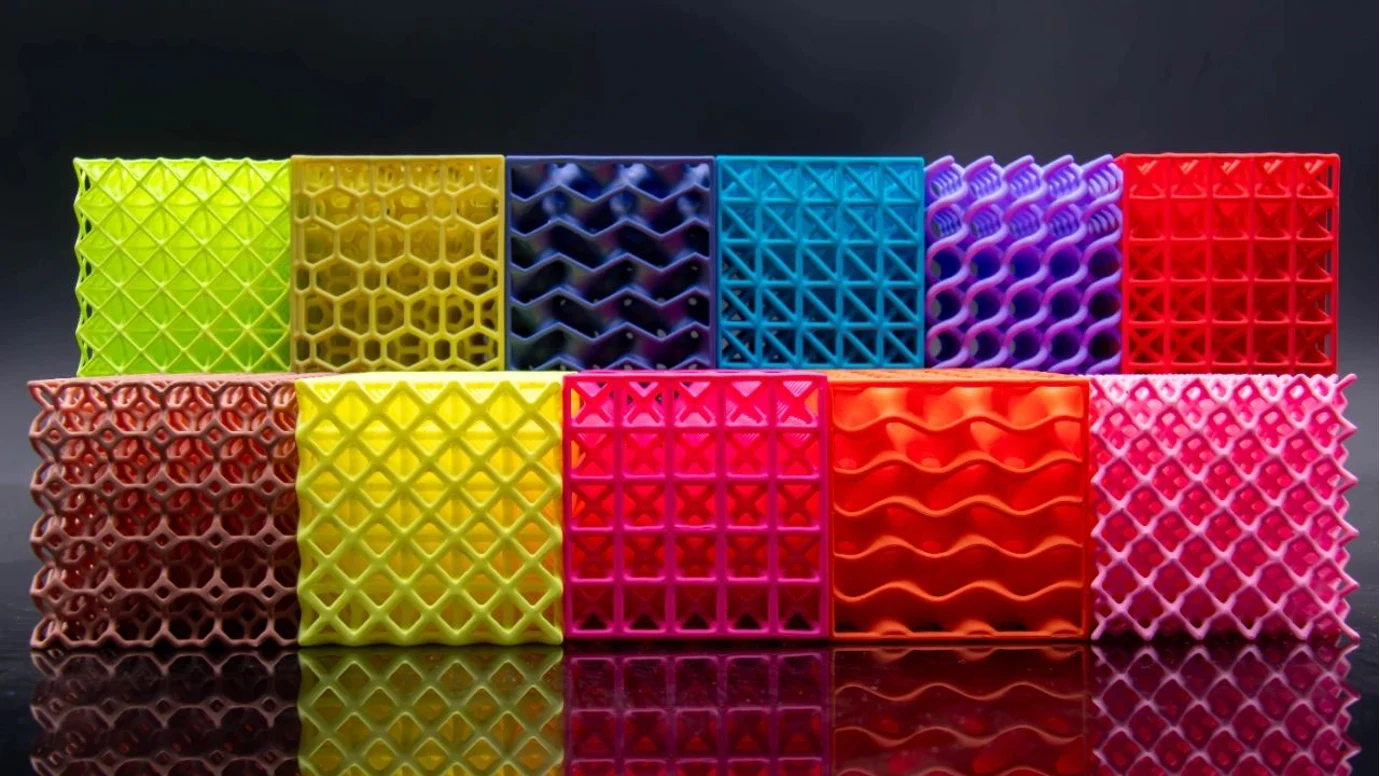
PollyPolymer has spent seven years developing this technology, beginning with materials. Polymer characteristics informed its proprietary equipment architecture, which in turn drove process breakthroughs and the development of HALS ultra-fast photopolymerization 3D printing. This enables high-performance elastomers to be manufactured at scale. These materials and processes are already used in volume production of footwear, bicycle saddles, helmets, lumbar supports and pillows, demonstrating process reliability and industrial maturity. Its materials research system has developed more than 8,000 polymer formulations and continues to introduce dental, engineering and antistatic materials, building a cross-industry portfolio of 3D-printing solutions.
For the intensive use expected of future humanoid robots, PollyPolymer has introduced multilayer structured honeycomb composites. These materials combine high elasticity, tear resistance and fatigue life. Elastic modulus, toughness, hardness and even color can be adjusted, with flexural endurance exceeding one million cycles.
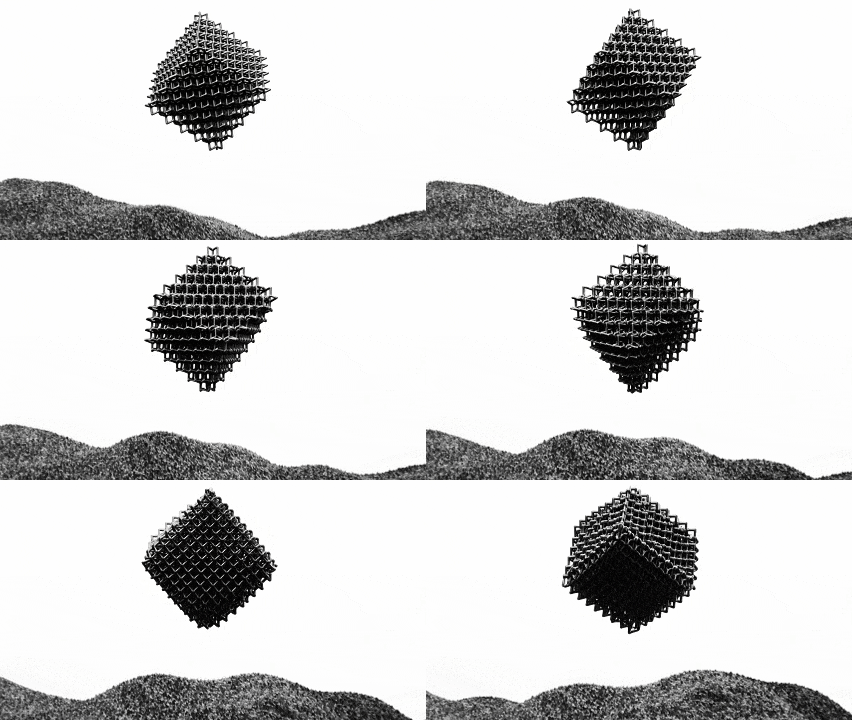
Data show that this composite improves energy absorption and helps prevent strain concentration under load. A 3D-printed multilayer structured honeycomb composite can absorb more than four times the energy of a conventional honeycomb structure, while recovering well after deformation. This recovery supports energy absorption under cyclic loading. Such materials and technologies provide a foundation for bringing biomimetic muscles into practical use.
When IRON was cut open and its internal muscle structure was revealed, the public saw more than a single company’s technology. It illustrated a broader shift in manufacturing methods and material logic. Industrial-era machines were built around metal skeletons; intelligent-era machines are reshaping muscles through material structures. The role of 3D printing is changing too. Rather than merely replacing a process, it turns manufacturing into a form-generation process that resembles biological evolution. Geometric algorithms, material design and digital light fields work together to give machines a degree of adaptability reminiscent of biological forms.
Looking ahead
Some have said that He Xiaopeng’s cut opened not just a shell, but the door to a new industry.
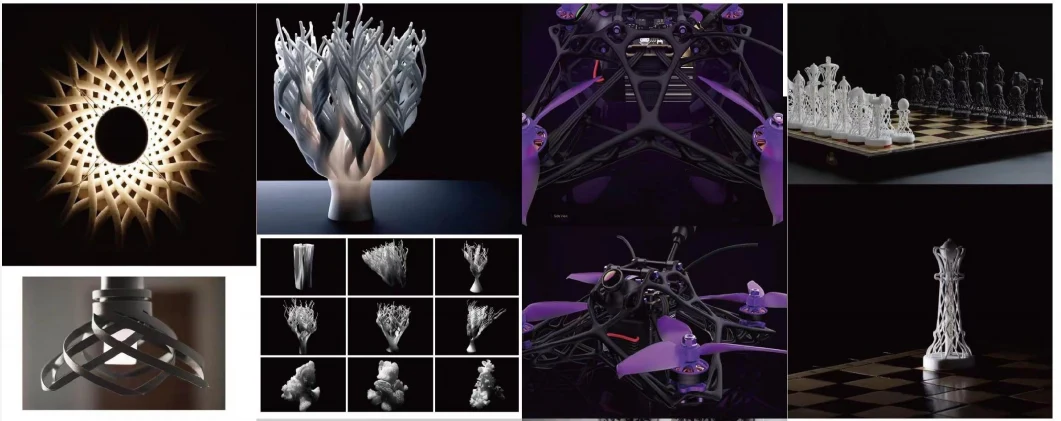
From humanoid robots to medical prostheses, from footwear and sports protection to flexible joints and smart wearables, any field that needs strength and flexibility together may see a new structural revolution. In this context, 3D printing becomes more than a prototyping tool: it becomes a structural language that can be manufactured at scale.
Looking back, that cut may come to symbolize a moment when the public saw that robots are more than algorithms and chips. Beneath the skin lies a different kind of manufacturing intelligence.